
More Than a Diagnosis: My Journey With axSpA
By Luis Guzman
I am 41 years old and I live in Guatemala. I am a husband, a father, a reader, and a lifelong lover of sport. Endurance sport especially: 12 Ironman 70.3 races, one full-distance Ironman and five marathons. But the achievements I am proudest of all happened in the last four years. Because at 37, I was diagnosed with ankylosing spondylitis.
The warning that broke me
It started with chronic back pain. My sister is a rheumatologist and lives with autoimmune disease herself, and she kept telling me I needed tests. I refused. Autoimmune conditions already existed in my family, and that made me want to know less, not more. I was in denial. Part of me knew the tests could confirm something I wasn’t ready to face. When I finally agreed, I sat in a doctor’s office and heard that my back was already significantly damaged. He warned me that if things continued, there might come a day when I couldn’t pick up my daughter or play with her. My daughter hadn’t been born yet. My wife was pregnant. That broke me. How could it not? Only months earlier, I had completed a full Ironman in 11 hours and 30 minutes. My body had carried me through 3.8 kilometers of swimming, 180 kilometers of cycling, and a marathon. And now a doctor was telling me that the same body might someday fail to lift my own child. I have always lived by a phrase: “When people tell you that you can’t do something, they are talking about their limitations, not yours.” But I wasn’t ready to fight. So, I did what I knew how to do. I kept going. I ignored the warning for months.
Do not let today’s diagnosis become tomorrow’s limitation. Work with your doctors, listen to your body and adapt when you need to, but keep believing in what your life can still be.
Then my daughter was born prematurely, at seven months, and spent the first 23 days of her life in the hospital. She hadn’t yet learned to suck properly, and she couldn’t come home until she did. Those were the longest 23 days of my life. Every day, I watched this tiny human being fight to develop something the rest of us never even think about. All she had to do was learn what her body needed, so she could finally come home. She taught me a lesson before she could ever speak to me: the will to fight is something we carry from the moment we are born. And perhaps, without knowing it, while she was fighting to come home, she was teaching her father that it was time for him to fight too.
Facing it
Two months after she was born, I completed the diagnostic process: another MRI, blood tests, a full clinical assessment. This time, there was nowhere left for my denial to hide. Ankylosing spondylitis. My doctor recommended a biologic treatment. Accepting the diagnosis had been hard. Accepting the treatment was another challenge entirely. My fear wasn’t theoretical. My sister also receives biologic treatment, and I had witnessed her strong reactions myself. I knew what those difficult days looked like, and I didn’t want that to become my life. My wife was beside me through all of it. She told me that whatever happened, she would be there. If there were difficult days, we would face them together. So, we bought the biologic. I still remember that first injection: my wife beside me, my sister showing me how to use the autoinjector, helping me understand what to expect. That injection represented much more than medication. As an endurance athlete, I had always associated strength with the ability to tolerate pain and keep moving. AxSpA was about to teach me a different definition of strength. Sometimes strength isn’t about enduring more pain. Sometimes it is about accepting that you need help.
The hardest months
The beginning was brutal. After each injection, I had repeated vomiting for around three days, and considerable swelling at the injection site. Sometimes it felt as though there was a ball underneath my skin. For months, every dose followed the same pattern. I couldn’t see any real improvement in the disease — only another few difficult days to survive. I was experiencing everything I had feared, without yet receiving the benefit I had hoped for. Then, around the fourth month, something changed. I started waking up without the pain I had grown used to. “Without pain” is relative for me: after a long run or a hard training week, tired muscles and sore legs are normal. But this was different. I began to understand the difference between the discomfort of asking something difficult of my body and the pain of a disease doing something to my body. One kind of pain reminded me of what I had done the day before. The other had reminded me every morning that I had AS. And suddenly, that second kind of pain was
New finish lines
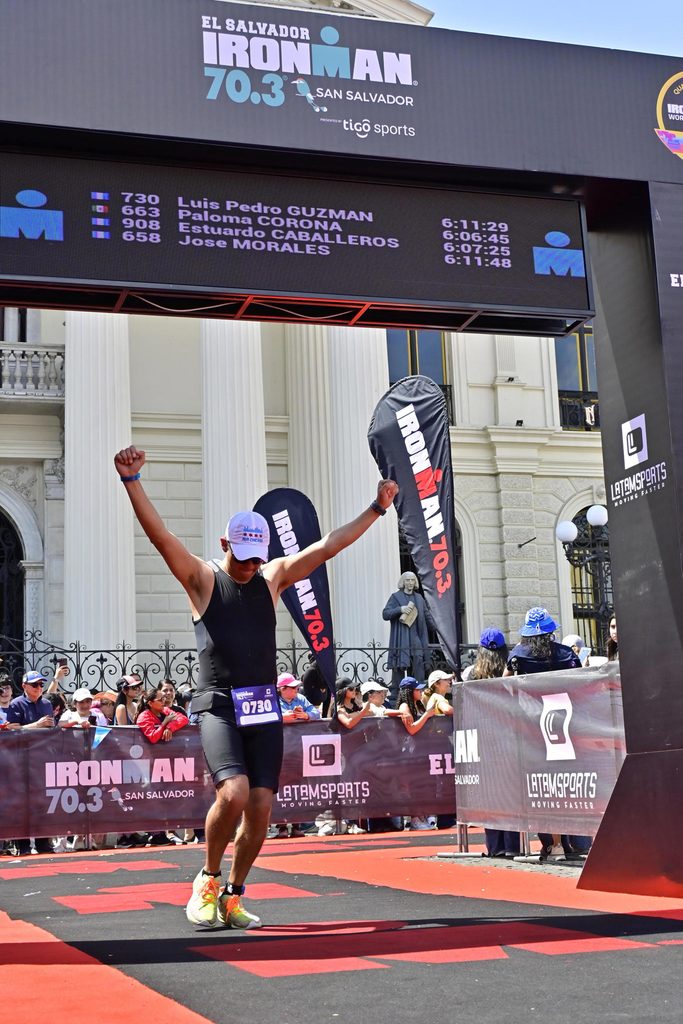
Once I realised the treatment was working, I wanted to challenge myself again — not to pretend the disease didn’t exist, but because I was treating it, listening to my body, and not ready to stop setting ambitious goals. I ran the Chicago Marathon in 4:04, a personal best. Then the Panama 70.3 in 5:50, followed by the extremely demanding El Salvador 70.3 in 6:10. And this year, the Guatemala Marathon — with enthesitis in my Achilles tendon forcing me to adapt once again. I crossed the finish line in 3 hours and 43 minutes. Another marathon personal best. Those numbers matter to me, but not because of the numbers. They don’t prove that axSpA is easy. They don’t mean that determination makes the disease disappear. And no one living with axSpA needs to run a marathon or finish an Ironman to prove anything. They mean that the diagnosis I once refused to face did not become the prediction of everything my life would — or would not — be.
Today I still take my biologic treatment monthly. The side effects haven’t completely disappeared: a couple of days of vomiting after an injection, and usually three days without training that week. But I have learned to organise my life around it. Three difficult days out of an entire month don’t define that month for me. Roughly 90% of the time, I feel well. So, I choose to build my life around that 90%. There are still setbacks — my Achilles enthesitis is one. But endurance sport taught me something that applies perfectly to living with axSpA: when the conditions change, you adapt. In a race, almost nothing goes according to plan. The weather changes. Nutrition goes wrong. Your legs don’t respond. Something begins to hurt. You cannot control every variable. You can control how you respond. I approach axSpA the same way. Sometimes I need to rest. Sometimes I need to change the plan. Sometimes I need treatment. And sometimes I need to keep moving forward.
“Your dad is an Ironman”
I still remember what that doctor told me before my daughter was born. Sometimes, when we walk as a family, my wife — always looking after me — encourages our daughter to keep walking instead of asking me to carry her. But secretly, I love it when she asks. My answer is usually the same: “I’ll carry you, sweetheart. Your dad is an Ironman.” Sometimes my back hurts when I do it. But that discomfort is nothing compared with what it means to have her in my arms. Because somewhere in the back of my mind is that 37- year-old man sitting in a doctor’s office, hearing that there might come a day when he wouldn’t be able to do exactly this. My daughter has joined me for a few meters during some of my races. Those moments mean more to me than any finishing time or personal record. I spent years measuring achievement in hours, minutes and seconds. I still love competing. I still want to become faster. But having my daughter run beside me — even for a few meters — means more.
What I would tell someone who has just been diagnosed with axSpA? I would first tell them that I understand how frightening that moment can be. Receiving this diagnosis is hard. Suddenly, your mind fills with questions about the future and about all the things you might no longer be able to do. I know because I did exactly that. Before my daughter was even born, I sat in a doctor’s office and was told that the damage to my back could eventually leave me unable to pick her up or play with her. Years later, I am running marathons, competing in triathlons and setting new personal bests. That doesn’t mean there aren’t difficult days. There are. I still have setbacks. I still have pain. My treatment still affects me for a few days every month, and sometimes axSpA forces me to change my plans. But I have learned not to judge my life by the difficult days. If I feel well 90% of the time, then I choose to build my life around that 90%, rather than allowing the other 10% to define it. AxSpA is something I live with, but it is not who I am. And perhaps that has been one of the unexpected lessons of this journey. I once thought strength meant being able to tolerate pain and keep going no matter what. Today, I understand strength differently. Strength can mean accepting a diagnosis you didn’t want. It can mean taking the treatment you were afraid of. It can mean allowing your wife, your sister and the people who love you to help you. It can mean resting for three days and starting again on the fourth. And sometimes it means crossing another finish line.
If someone has just been diagnosed and is wondering what their life will look like, I would tell them this: don’t let today’s diagnosis become tomorrow’s limitation. Work with your doctors, listen to your body, adapt when you need to – but don’t stop believing in what your life can still be. A doctor once told me that one day I might not be able to carry my daughter. Today, sometimes she runs beside me. And when she gets tired, I can still pick her up.
“You don’t need to run a marathon or complete an Ironman to prove anything. Find your own challenge, listen to your body and keep moving forward.”
Other NEWS
Progress in axSpA care
PERSPECTIVE FROM ALFASIGMA Progress in axSpA care: defining success together Over the …
Read More
Going the distance: Joe’s story
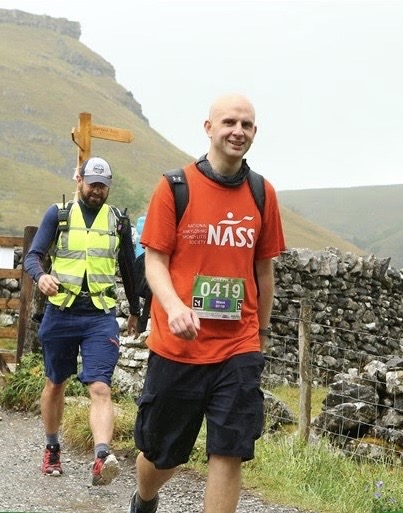
From pain to diagnosis Joe Eddison experienced reactive arthritis in 2005. …
Read More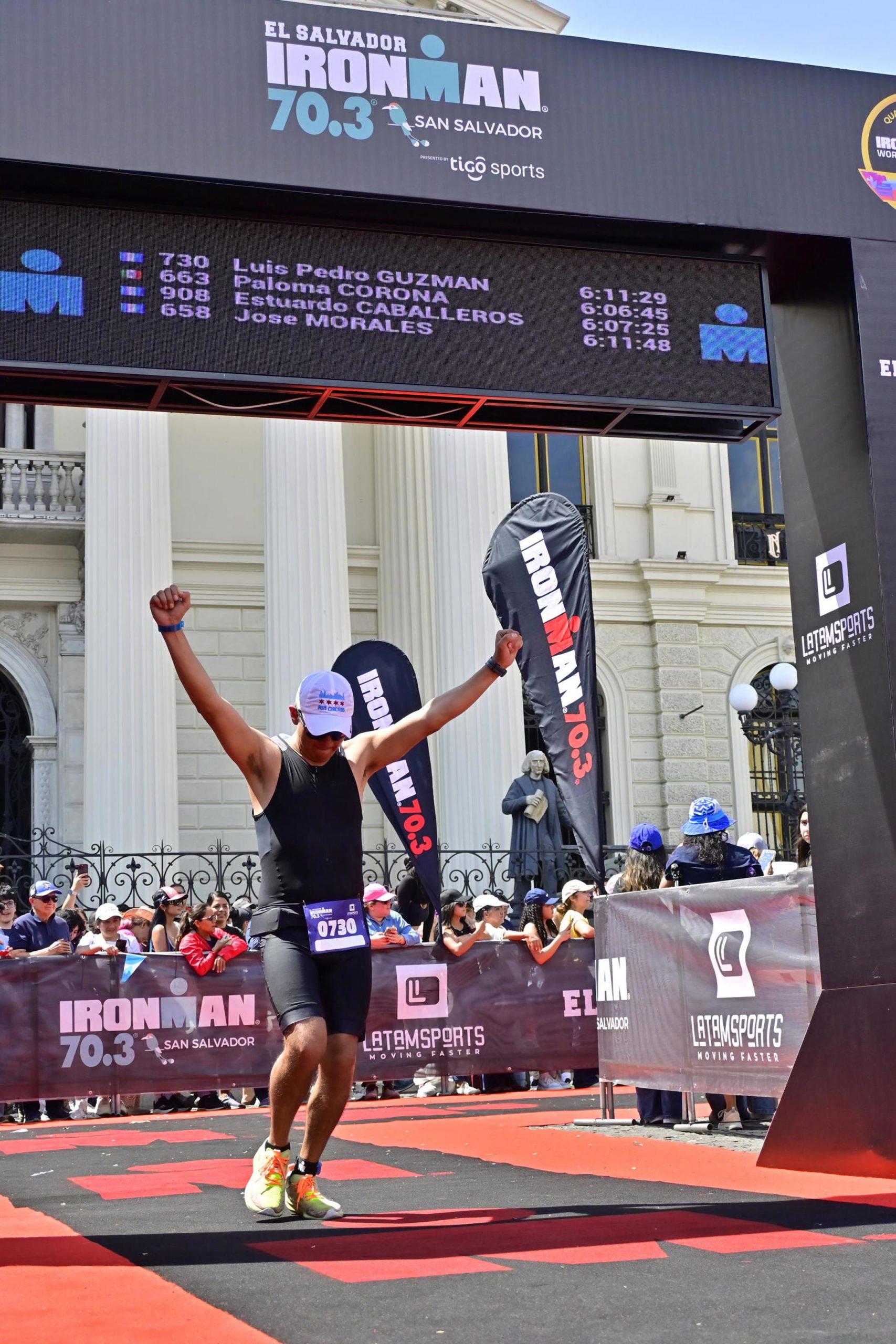
Moving Forward with AxSpA
Two people, two endurance stories and one shared determination to …
Read More